


1. Introduction
RIVERS-REST responds to the urgent need to reduce the pollution and excess of fine sediments that rivers carry into the Atlantic Ocean, with serious effects on the environment, the functionality and sustainability of the water system, and many sectors of the Blue Economy. The origin lies in the denaturation of the rivers by urban and hydraulic policies, drafted against nature and not valid anymore in a context of Climate Change, and also in outdated agricultural practices and water policies.
RIVERS-REST addresses these problems through Pilots to test new technical and governance solutions to reduce sediment and chemical pollutants runoff into rivers, estuaries and to the Atlantic, implement Nature restoration initiatives testing new approaches and techniques, plus joint development of planning methods and instruments capable of correcting these problems.
2. Funding
Interreg Atlantic Area (European Union Development Fund) ref: EAPA_0120/2024.
3. Main and Specific Goals
The main objective of RIVERS-REST is to fight against marine pollution from its origin, developing governance frameworks in which farmers and Agriculture, Environment and Water Administrations assume commitments to minimize the loss of fertile soil, the dragging of sediments and chemical products to rivers, and to restore rivers ecosystems and functionalities so that they constitute ecological connectors or Green Infrastructures. It’s aligned with Objective 7, Pillar IV, Atlantic Action Plan 2.0.
Specific objectives related to the different work packages of RIVERS-REST:
- Design and test multilevel governance mechanisms plus modelling and monitoring technologies to tackle the problem of pollution that rivers drag into the sea at its source: promoting changes that make agriculture more sustainable and less polluting.
- Tackle the source of erosion and loss of fertile soils that are washed along with nitrates and phosphates into rivers and the sea: Designing and testing river restoration examples & multi-level governance to boost a more sustainable agriculture.
- Minimize the contribution of sediments to the Estuaries, monitor the effect of WP1 and WP2 actions on water quality (turbidity and pollution) and test solutions to the impact of these variables on fluvial and marine Ecosystems and the Blue Economy.
- Test neutralization techniques and Nature based Solutions to reduce pollutants, enhance water quality in estuaries and the Atlantic and promote Blue Economy through multilevel cooperation (Ministries, Regions, Ports, Basin Authorities).
4. Methodology
WP1. REDUCE POLLUTION DRIFT TO THE OCEAN
Overall description:
WP1 will leverage the Water Framework Directive to promote new planning approaches and changes in polluting agricultural practices. It will combine governance and technical innovation to leverage off-project funding (CAP eco-schemes, national funds) to improve the sustainability of water systems and reduce pollution carried by rivers into the Atlantic.
Its methodologies for negotiating, monitoring compliance with agreements and tracking river pollution will be transferable to any EU region.
Activities:
This Work Package develops the following activities:
- 1 AGREEMENTS between the parties to reduce pollution in rivers.
- 2 WATER PLANNING: Development of Plans and Policies demanded by the Water Framework Directive.
- 3 PILOT1: Preserve and neutralize pollution from agriculture that affects reservoirs for human consumption. Guadalquivir Basin, Retortillo reservoir.
Contribution of the University of Coruña:
In the activity 1.2 to define areas of protection against contaminants around strategic water resources and regulations the University of Coruña will contribute to territorial planning with its geographic and hydraulic analysis capabilities. We will also apply hydraulic analysis to determine the behavior of surface runoff and we will delimit the specific vulnerable areas to discharges or human activities.
In the Activity 1.3 (Pilot 1) we will model, in collaboration with University of Coimbra, the runoff of rainwater from nearby crops based on the characteristics of the land.
WP2. REDUCE RIVER EROSION AND SEDIMENT TRANSPORT TO THE ATLANTIC OCEAN
Overall description:
WP2 will test Nature based Solutions and Governance models to reduce erosion and drag sediments and pollutants into the sea, in 3 Pilot scenarios: Excessive plowing in crop fields, dams that alter sediments transport and deforested mountain areas that favor erosion.
The results will be transferred to Public Policies and be applicable by AA Watershed Authorities and the Regional Ministries of Environment that care for pollutants control, river and marine ecosystems, soil loss & water quality.
Activities:
Activities in this Work Package are all directly linked to the formulas and frameworks for agreement between the parties from A 1.2:
- 1 ENVIRONMENTAL GOVERNANCE: Agreements with farmers to improve agricultural practices and reduce erosion and turbidity dragged by rivers to the Ocean.
- 2 PILOT 2: RIVER RESTORATION THROUGH NATURE BASED SOLUTIONS to reduce erosion, the dragging of soils and fertilizers into rivers and the Atlantic and apply NbS to restore the environmental quality of rivers and the Ocean. Pilot Area of LOWER GENIL BASIN.
- A 2.3 PILOT3: SEDIMENT-CLOGGED RESERVOIRS. Improved water management and Nbs to reduce sediment transport and clogging of reservoirs & increase water regulation and storage as a CCA in reservoirs silt up by sediments in Algarve (Odeleite and Boliche, where Ada has the competences) and Andalusia (Cordobilla -CHG- and Celemín and Barbate -Andalusian Regional Government).
- A 2.4 SEDIMENT MANAGEMENT STRATEGY: Will involve two working groups: one focused on sedimentary dynamics and another on navigability and river maintenance (Ports of Bordeaux and Seville, SMIDDEST). It will integrate results from Pilot 2 and propose NbS and land use regulations to mitigate erosion and restore sediment transport.
Contribution of the University of Coruña:
In the Activity 2.2 (Pilot 2) University of Coruña will collaborate in the hydraulic analyses that will propose the NbS design needed. In addition, we will study erosion and runoff in agricultural areas, to predict the behaviors of the mud flows and sediment transport along the Rio Blanco and Lower Genil as well as its possible flooding scenarios.
In the Activity 2.3 (Pilot 3) the University of Coruña will led the hydraulic models that will be applied to predict flood scenarios and design Nature-Based Solutions to mitigate flood risk connected to A2.1 and consistent with the agricultural measures that will be promoted from A1.1.
In activity 2.4 we will focus on the sedimentary dynamics.
WP3. ATLANTIC OCEAN ESTUARIES: SEDIMENT MANAGEMENT
Overall description:
WP3 is focused on Estuaries, the meeting point between rivers and the Atlantic, where the impacts on the Blue Economy are greatest. It seeks to promote transnational cooperation and capitalize on the scientific and technical work of stakeholders and third parties.
It provides pilot, technical and governance solutions for these critical spaces, to the impacts of unbalanced sedimentary dynamics on Biodiversity, Fisheries, Navigability, and Tourism.
Activities:
- 1 PILOT 4: RIVER RESTORATION IN ESTUARIES. THE ROLE OF PORT AUTHORITIES: Pilot 4 consists of testing new formulas for river restoration, promoted by Port Authorities and National and Regional Environmental administrations. It consists of testing new approaches to restoring the Guadalquivir River margins in its estuary as a Nature based Solution.
- 2 PILOT 5: RENATURALISATION OF A RIVER: The activity consists of presenting a technical proposal for the design of this renaturalization, also offering the study of alternatives to support decision-making with the ultimate goal of recovering the layout and morphology of the historic channel so that the annual floods of the river once again flood the Doñana marsh.
- 3 SUSTAINABLE RIVER NAVIGABILITY FOR LARGE MERCHANT SHIPS.
- 4 PILOT 6: NATURAL REPLENISHMENT OF SAND ON THE BEACHES OF FIGUEIRA DA FOZ.
Contribution of the University of Coruña:
In the activity 3.1 we will provide the hydraulic and sedimentary models in collaboration with University of Coimbra focusing on the new formulas for river restoration of the Guadalquivir River Margins applying NbS.
Regarding activity of Pilot 5 in Doñana, Universities of Coruña and Coimbra, together with Andalus Organic, will carry out an environmental, territorial, hydrological and hydraulic study and a proposal for renaturalisation that will return the Guadiamar River to a state close to its original state.
We will work on the analysis of different data related to bathymetry, navigability and sedimentation along the Gironde Estuary for Activity 3.3 and will perform hydraulic analyses of river dynamics for Pilot 6.
WP4. ATLANTIC OCEAN ESTUARIES: POLLUTION MANAGEMENT
Overall description:
WP4 is focused on Estuaries, the meeting point between rivers and the Atlantic, where the impacts on the Blue Economy are greatest. It is designed to promote both transnational cooperation and to capitalize on the scientific and technical work of third parties.
It analyses the impacts of pollution on Biodiversity, Fisheries, and Tourism, and develops Pilots to improve the Governance and test NbS to enhance water and environmental quality of these critical spaces.
Activities:
WP4 will develop the following activities:
- 1 PILOT 7: GOVERNANCE TO REDUCE POLLUTION REACHING ESTUARIES AND THE ATLANTIC
- A 4.2 PILOT 8: MONDEGO ESTUARY: MANAGEMENT OF POLLUTION IMPACTS ON AQUACULTURE (BLUE ECONOMY).
- 3 PILOT 9: RESTORATION OF WETLANDS AND SEQUESTRATION OF NITRATES.
Contribution of the University of Coruña:
For pilot 9 in Trebujena Marshes University of A Coruña will be responsible for developing the hydraulic modeling to design a system that guarantees adequate water circulation between the Guadalquivir River and the restored marshes in different climate scenarios.
5. Partners
The partners involved in the project are as follows:
- Autoridad Portuaria de Sevilla (Andalucía, Spain)
- Agencia de Régimen Especial Ciclo Integral Aguas del Retortillo (Andalucía, Spain)
- Grand Port Maritime de Bordeaux (Nouvelle Aquitaine, France)
- Syndicat Mixte pour le Developpement Durable de le’ stuaire de la Gironde (Nouvelle Aquitaine, France)
- Confederación Hidrográfica del Guadalquivir (Andalucía, Spain)
- Universidade da Coruña (Galicia, Spain)
- Universidade de Coimbra (Centro, Portugal)
- Trinity College Dublin (School of Engineering) (Eastern and Midland, Ireland)
- Yuntas, Andalus Organic, S.L. (Andalucía, Spain)
- Águas do Algarve (Algarve, Portugal)
- Université de Limoges (Laboratoire E2Lim) (Nouvelle Aquitaine, France)
6. Dissemination
Papers
National and international congresses and seminars
7. Group Meetings
April 2026. Steering Meeting of project’s partners in Dublin
Trinity College Dublin hosted the project’s second meeting, attended by proj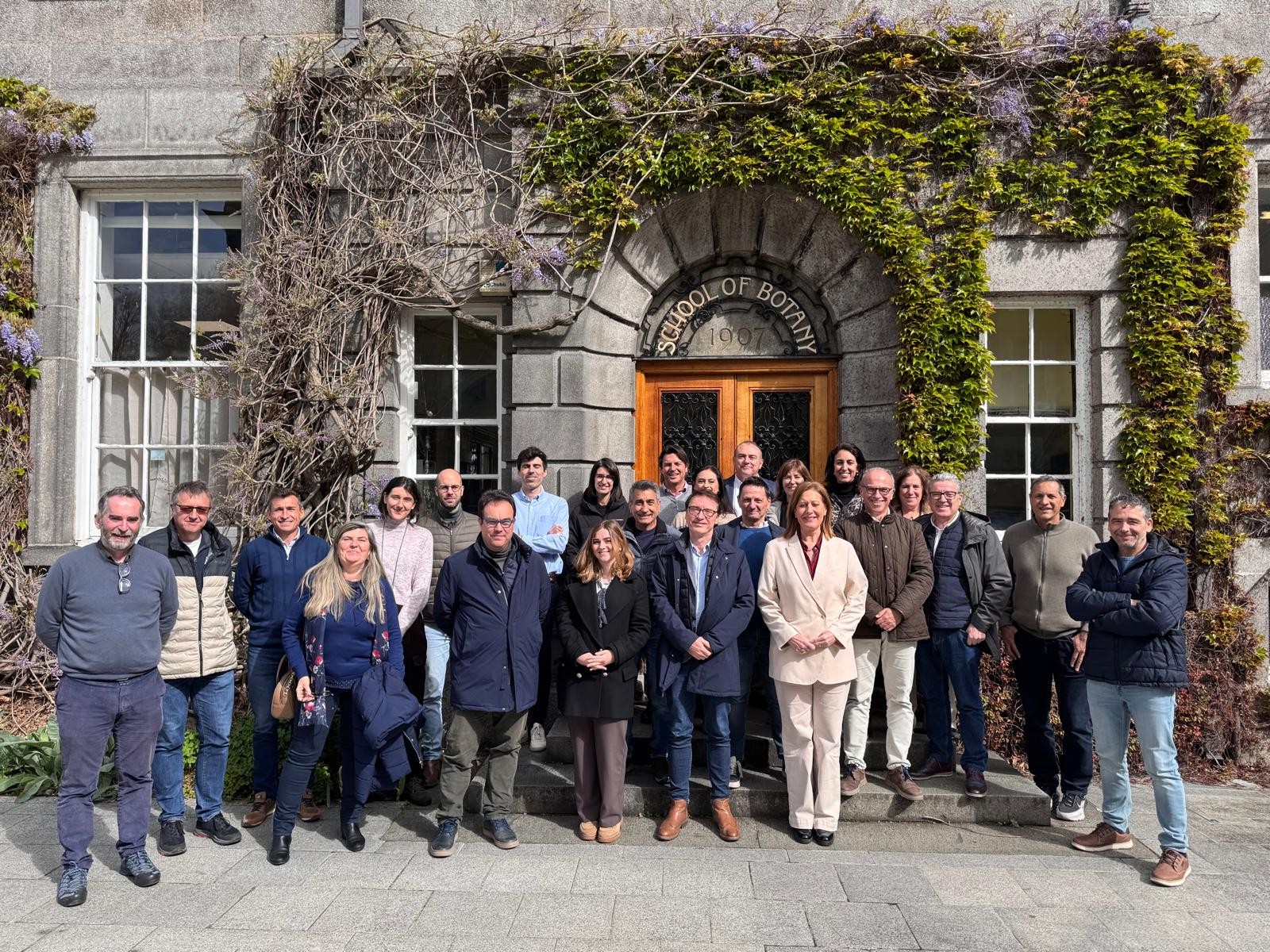 ect partners from April 15–17.
During these meetings, progress on the various project pilots was presented, and discussions focused on technical and territorial aspects. It was a key opportunity to share the project’s vision, fostering synergies among partners and adapting certain solutions during this initial phase.
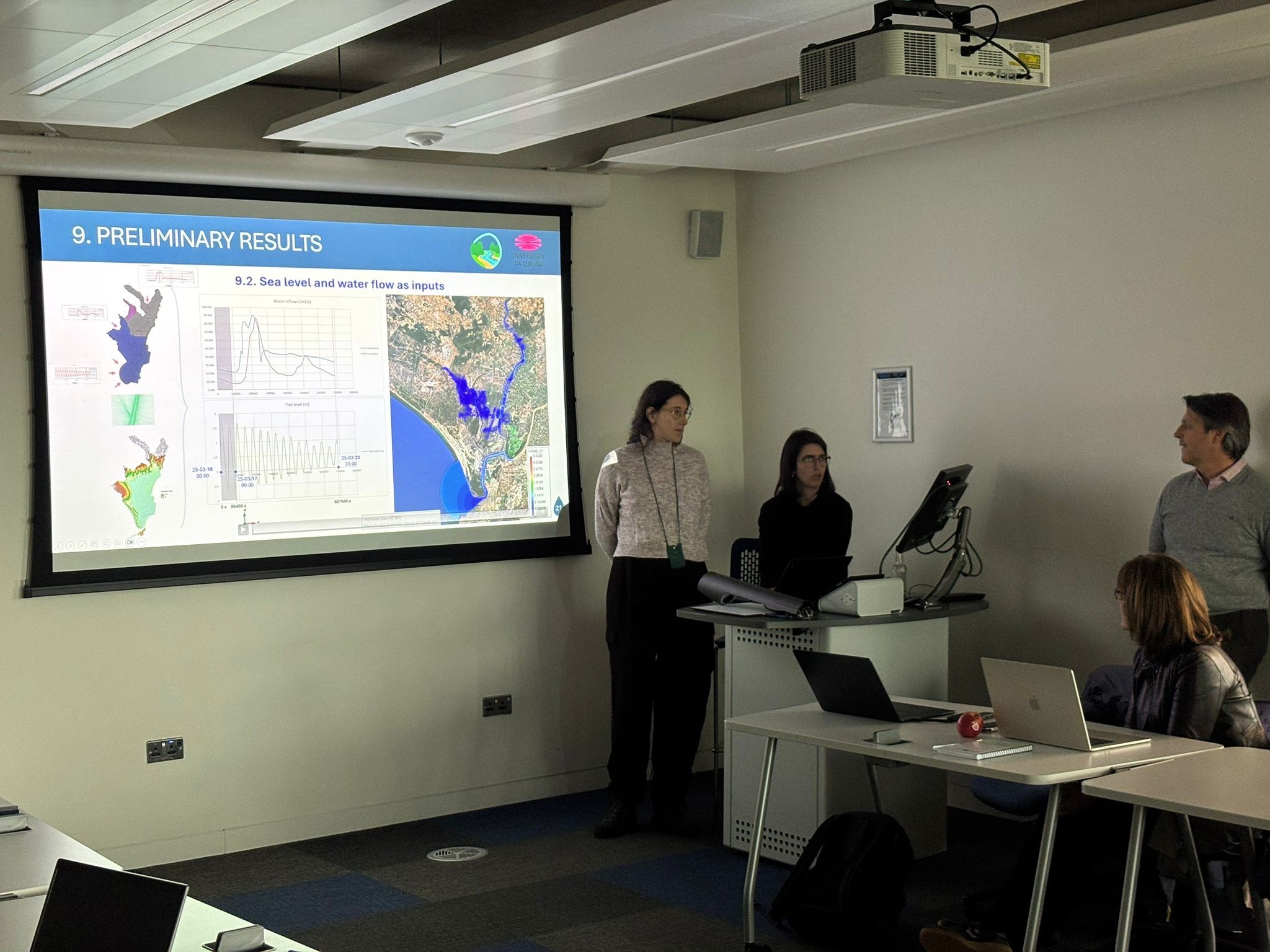
The University of A Coruña presented the progress made in hydraulic modeling and the analysis of historical data for Pilot 5, emphasizing the importance of having accurate and reliable data to develop an effective tool. The pilot consists of developing a numerical model using the Iber software (www.iberaula.es), which will allow the analysis of the dynamics and response of the Doñana marshes to extreme flood events, as well as understanding their functioning across different hydroperiods.
March 2026. Trip to Doñana National Park for field surveying and partner meeting
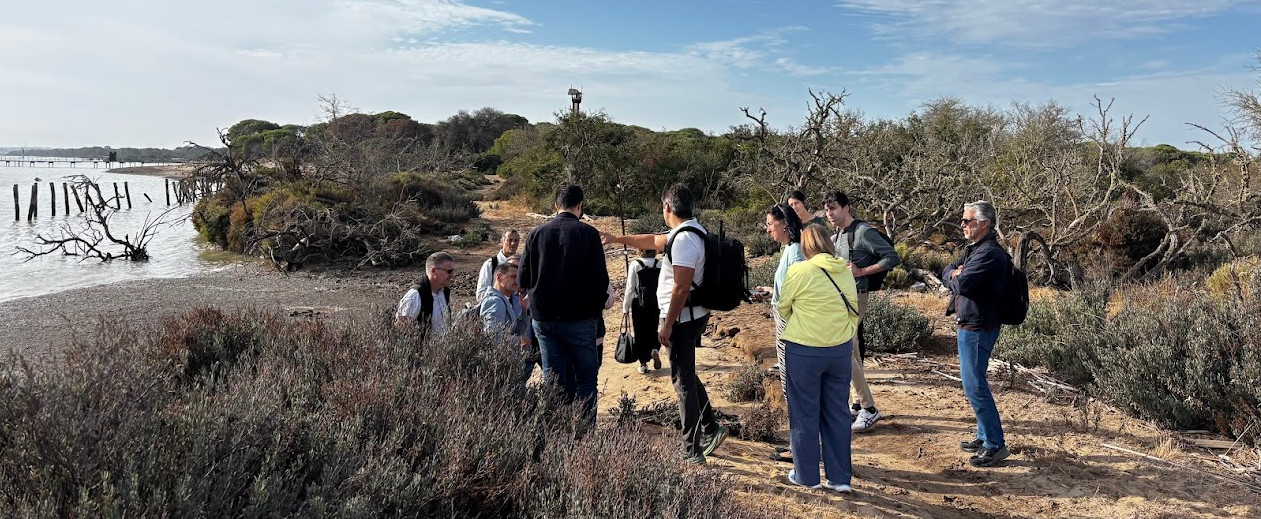
Researchers from the University of A Coruña went on a field trip to Doñana National Park, organized by the project coordinator Yuntas, to conduct surveys of various key locations and critical infrastructure in the area, as well as to learn about the park’s hydrological and ecosystem dynamics, as part of Pilot 5.
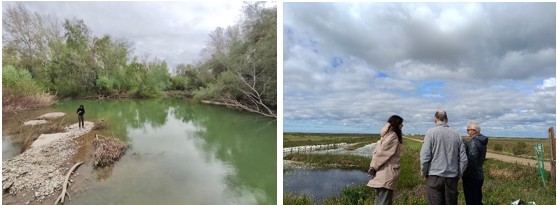 In addition, several meetings were held with project partners (Yuntas, University of Limoges, CHG and River’s Trust), who accompanied the visit, to discuss pilot development. Key personnel from the Doñana Biological Station – CSIC and the Department of Sustainability and Environment of the Regional Government of Andalusia also joined the field trip, contributing their extensive knowledge of the area.
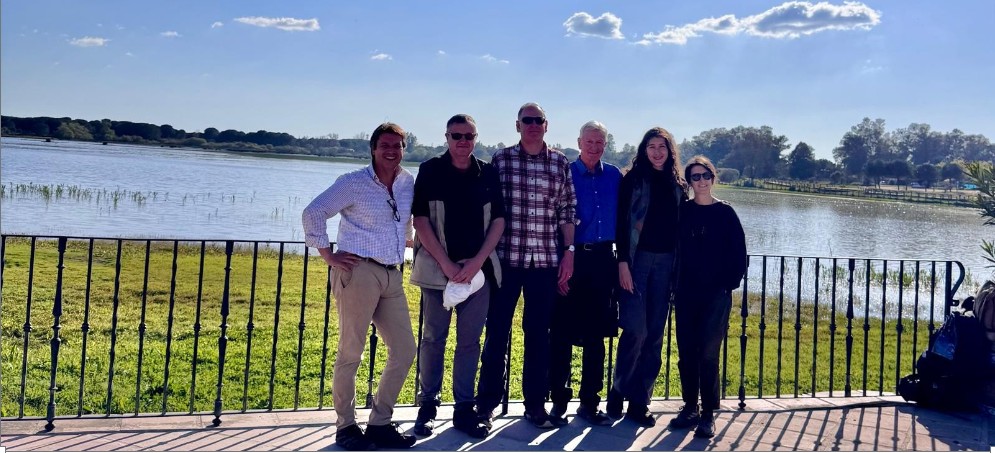
September 2025. Andalusia hosts the kick-off meeting of the Rivers-Rest project
Partners of the Rivers-Rest project, led by ARECIAR (Agencia de Régimen Especial Ciclo Integral Aguas del Retortillo), chose the Spanish Rdelegion of Andalusia for the kick-off meeting of the project. The two-day meeting (14 and 15 October) included a detailed review of each partner’s commitments, activities and goals, as well as visits to pilot locations like Doñana National Park and the banks of Río Blanco, in the countryside of the Autonomous Community of Andalusia.
The pilots are identified as the best location for testing innovative tools and strategies to lower the runoff of sediment and chemical pollutants into rivers, estuaries, and the Atlantic Ocean. Partners will work to implement nature restoration activities, tackling the denaturation of the rivers in the Atlantic Region.
University of A Coruña, which is a partner in this project, attended this meeting.
8. Media
Website of the project: https://rivers-rest.yuntas.eu/
9. People
Luis Cea Gómez | luis.cea@udc.es
Ania Fernández Portillo | ania.fernandez@udc.es
Marina de Miguel Gallo | marina.demiguel@udc.es
Jerónimo Puertas Agudo | jeronimo.puertas@udc.es
Esteban Sañudo | e.sanudo@udc.es